Our Location
Shajing, Shenzhen, China

Our Location
Shajing, Shenzhen, China
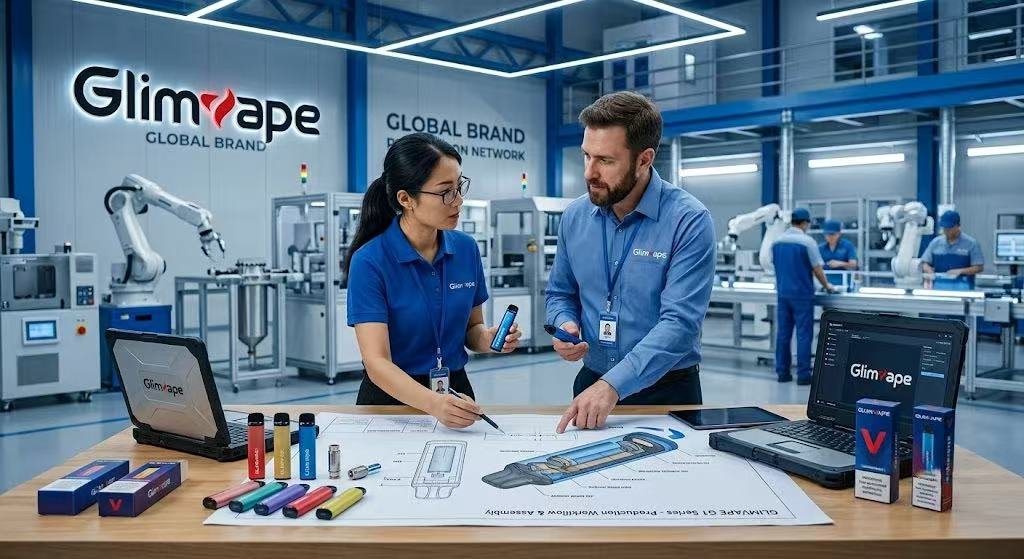
The global vape market changes quickly. A product that performs well today may be replaced by a newer design within a few months. From high-puff disposable vapes to refillable pod systems, brands need to respond to changing product trends and consumer demand.
For startups, distributors, and private-label brands, building a manufacturing facility from scratch is rarely practical. Working with an experienced vape OEM manufacturer can provide access to established production capabilities without the investment required to build a factory.
However, a successful OEM project involves much more than putting a logo on an existing device. Product selection, customization, flavor development, quality control, packaging, and market-specific compliance all need to be considered.
This guide explains how vape OEM manufacturing works and what brands should evaluate before placing an order.
Before contacting a manufacturer, it is important to understand which production model best matches your business.
Common options include:
Neutral Stock → OEM / ODM Customization → Private Mold Development
Neutral stock products are existing devices manufactured without a specific brand identity. Depending on the supplier, buyers may be able to add basic branding, packaging, or labeling before distribution.
Advantages:
Limitations:
This model can work well when a brand wants to test demand before investing in deeper customization.
OEM and ODM provide more opportunities for product differentiation.
In an OEM project, the manufacturer generally produces according to the buyer’s specifications. ODM projects may involve more design and product-development input from the manufacturer.
Depending on the platform and project requirements, customization may include:
The main advantage is that brands can build a more distinctive product without necessarily developing every component from scratch.
For a more detailed explanation, see our guide to disposable vape OEM vs ODM manufacturing.
Private mold development involves creating a more exclusive product design and tooling.
A brand may provide its own industrial design, or work with the manufacturer to develop the housing and related components.
Advantages:
Limitations:
The actual development time and MOQ depend heavily on the product structure, tooling requirements, and manufacturer.
A successful vape product is usually the result of several elements working together rather than one standout feature.
The heating system and e-liquid formulation have a major influence on the overall vaping experience.
Mesh coils are widely used in high-capacity disposable vapes because their larger heating surface can support consistent vaporization when properly matched with the device and e-liquid.
Some products also use dual-mesh or other multi-coil configurations.
Brands evaluating coil technology should consider:
Our guide on mesh coils in high-puff disposable vapes provides more detail on this topic.
Flavor development is equally important. Consumer preferences can vary considerably between markets, so a flavor strategy that works in one region may not perform the same way elsewhere.
Instead of simply adding more flavors, brands should consider:
Testing multiple formulations before mass production can reduce the risk of launching a flavor that does not match the target market.
Product appearance can influence how a device is perceived at retail.
Depending on the manufacturer, available finishing options may include:
Brands may also consider practical features such as:
These features can increase manufacturing complexity and cost, so they should be evaluated based on the target market rather than added simply for marketing purposes.
Packaging needs to serve both branding and compliance purposes.
Labeling requirements vary by market and product type. Depending on the destination, packaging may need specific warnings, nicotine information, importer details, recycling symbols, language requirements, or other regulatory information.
Brands should confirm the applicable requirements for their target market before approving final packaging.
An experienced manufacturer can help identify packaging issues during development, but the brand and importer should still verify the requirements that apply to the destination market.
A typical OEM project may follow this general workflow:
1. Product Requirements → 2. Device Selection →
3. Sample Development → 4. Flavor Testing →
5. Packaging Approval → 6. Mass Production →
7. Quality Inspection → 8. Shipping
The exact process varies according to the product and customization level.
During sample evaluation, brands should look beyond appearance.
Important checks may include:
For larger orders, production inspection before shipment can provide an additional layer of quality control.
Some products are marketed with very high puff-count figures. Because puff counts depend on testing conditions and draw patterns, brands should not rely on the headline number alone.
Before placing an order, confirm:
Sample testing is particularly important when the advertised performance is a major part of the product’s marketing.
Leakage can be influenced by device construction, sealing, filling, storage conditions, temperature, pressure changes, and transportation.
No manufacturer should be expected to guarantee zero leakage under every condition.
Instead, buyers should ask about:
MOQ depends on the product, customization level, flavor quantity, packaging requirements, and manufacturer.
A lower MOQ may be more suitable for a new brand testing a market, while larger orders can make deeper customization more practical.
Before ordering, clarify whether the MOQ applies to:
Product quality is only one part of a successful OEM relationship.
Before placing an order, ask how the manufacturer handles:
These terms should be clearly documented before mass production.
Price should not be the only factor when selecting a manufacturer.
A reliable vape manufacturing partner should be able to demonstrate strengths in several areas:
It is also useful to review the manufacturer’s existing product range and production capabilities before committing to a large project.
Our guide on questions to ask a vape manufacturer before ordering can help buyers prepare for supplier discussions.
For businesses comparing different suppliers, our disposable vape wholesale suppliers guide covers quality, MOQ, pricing, logistics, customization, and supplier evaluation.
OEM generally refers to manufacturing according to the buyer’s specifications, while ODM typically involves more product design and development from the manufacturer.
The exact scope can vary between suppliers, so brands should confirm design responsibilities, tooling, specifications, and intellectual-property arrangements in the contract.
There is no universal MOQ for vape OEM projects.
The required quantity can depend on the device, flavor count, packaging, customization level, tooling, and production requirements.
Always request a project-specific quotation instead of relying on a general MOQ advertised online.
OEM timelines vary by project.
Sample development, flavor testing, packaging approval, material preparation, and mass production can each affect the final schedule. More complex products or private-mold projects generally require more development time.
The manufacturer should provide a project timeline after confirming the product specifications.
In many OEM projects, flavor customization is possible.
However, the available options depend on the manufacturer’s formulation capabilities, ingredients, nicotine requirements, and the regulations applicable to the destination market.
Testing multiple formulations before mass production is recommended.
The documents required depend on the destination market and product.
Depending on the project, buyers may need technical documentation, battery-related test reports, material information, safety documentation, or market-specific compliance evidence.
Do not assume that a document such as CE, RoHS, MSDS, or UN38.3 automatically means a finished vape product complies with every requirement in a particular country.
Always confirm the requirements for the exact market and product being imported.
Start with samples and confirm the final specifications in writing.
Before mass production, brands should approve the device, flavors, packaging, and labeling. For larger orders, consider pre-shipment inspection and establish clear procedures for defective products, replacements, and quality disputes.
The more clearly these requirements are defined before production, the easier it is to manage quality risks later.
Vape OEM manufacturing helps brands launch customized products without building their own factory. Before placing an order, evaluate product quality, customization, MOQ, compliance, and after-sales support.
A reliable OEM partner should offer clear communication, consistent production, and flexible support from product development to mass production.
WhatsApp us
Legal Age Required: Products on this site are for adults of legal smoking age only. By accessing Glimvape, you confirm your age and consent to verification. Are you over 21 years of age?